
Bella & India - Pelican House
1. What was the original spark behind Pelican House, and when did it shift from an idea into something you knew you had to build?
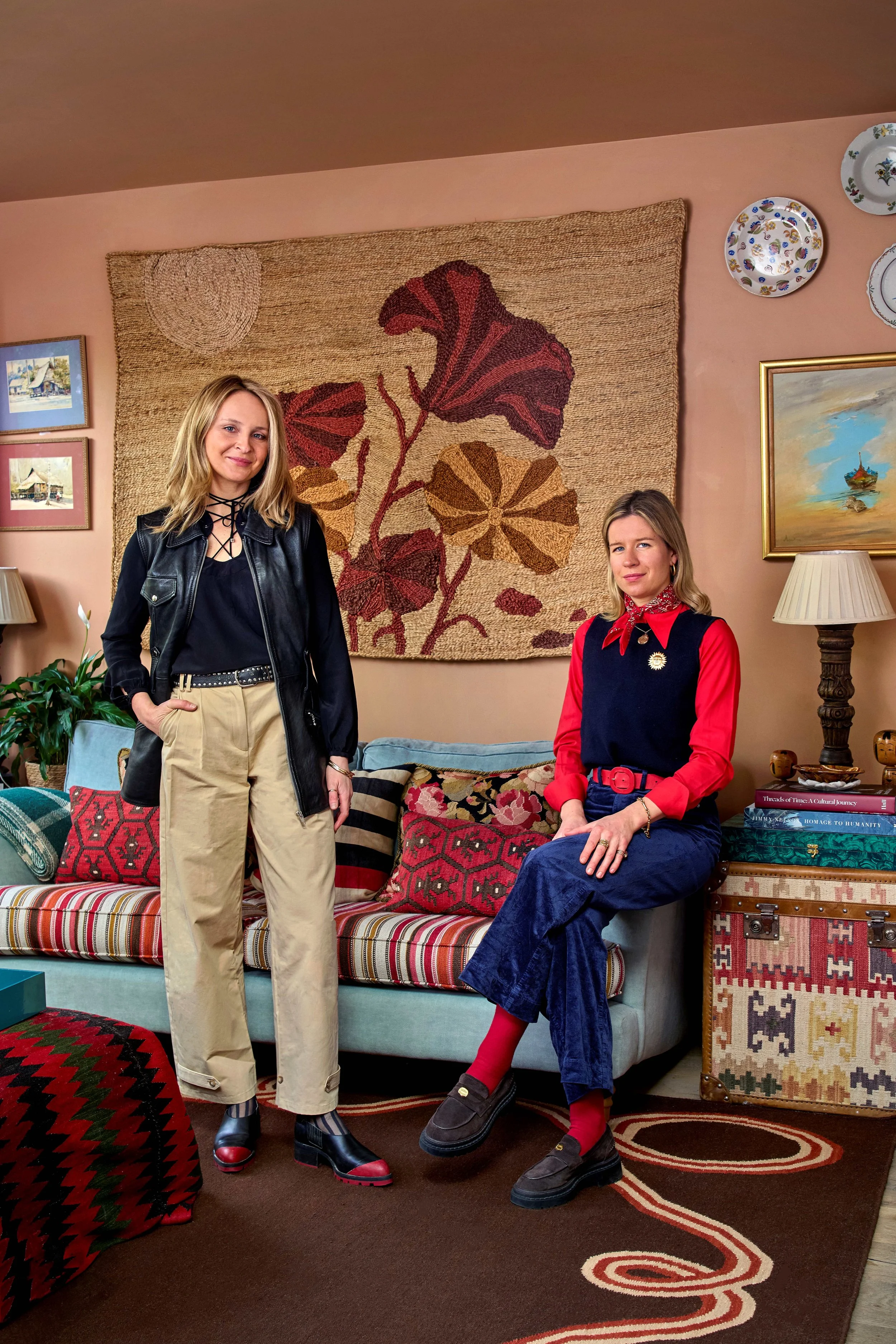
Pelican House began in Rajasthan in 2021, where our founder, Bella Valenzia, was living at the time. With a background in Art History, Bella has always been drawn to the stories behind objects — the human hands, heritage, and histories that bring them to life. Immersed in India’s rich world of textiles and artisanal craft, she became increasingly aware of a gap in the global interiors market: while beautiful products were everywhere, the people behind them were often invisible. That realisation sparked a mission — to connect clients with artisans through meaningful, design-led collaboration.
Bringing it to life, however, was anything but simple. During lockdown, Bella travelled solo across India to better understand the realities of the craft industry, journeying far beyond the usual routes. She visited tribal villages, remote mountain regions, and met with NGOs, artisans, and craft experts to understand how Pelican House could make a meaningful difference.
Shortly after, Creative Director India Holmes joined the fold. India had spent seven years as Design Director at de Gournay, working with luxury brands and hundreds of artisans across India and China. When she and Bella met, there was an instant alignment of values — a shared belief in the power of design, storytelling, and ethical collaboration.
That research and partnership laid the foundation for our vision: design as a force for good.
From there, Bella and India threw themselves into building the brand from scratch — juggling multiple jobs, scraping together resources, and learning as they went. The process took two years of persistence, late nights, and belief. Pelican House officially launched in 2023, and the future feels more exciting than ever.
2. What does the name Pelican House mean to you, and how does it reflect the brand’s identity?
Pelicans are known for being nurturing, generous, and deeply connected to their communities — all qualities we aspire to as a brand and as people. The name felt personal, warm, and rooted in care. Adding “House” connects it to home while also giving it a sense of openness and possibility — a nod to the future of Pelican House and where it may go.
3. Where do you draw inspiration from when designing — places, people, art, or lived experience?
Inspiration comes from everything around us — from trips to India, to Victorian floor tiles, to railings in Islington. Anything that catches our eye can spark an idea.
We’re known for our confident use of colour and love of intricate patterns. We draw from a wide variety of palettes, materials, and techniques, always grounded in respect for heritage and a desire to create something fresh. The endless possibilities within rug-making continue to inspire us.
4. How do you balance traditional craft techniques with a more contemporary aesthetic?
For us, the two aren’t in opposition. We work exclusively with traditional craft techniques and celebrate the skill, time, and generational knowledge embedded within them. Handmade processes create a quality and character that simply can’t be replicated industrially.
Our role is to preserve and celebrate those techniques while collaborating with weavers through contemporary designs that suit modern interiors.
5. Can you walk us through your process, from first concept to finished rug?
Our design process follows a loose framework, though like most creative journeys, it’s full of nuance. The research phase is one of the most important stages and often the most overlooked. We spend time exploring the history behind a theme, as well as the culture and setting where the rug will eventually live. Those details become the threads that tie the final piece together.
Once we’ve gathered our references and imagery, the design process begins with collaging ideas, sketching elements, and experimenting with composition. These early stages are usually developed as black-and-white line drawings before moving into colour.
We prefer to establish a full colour palette upfront — often more colours than we’ll eventually use — as it’s easier to design within an agreed palette than choose colours individually. Even subtle changes in placement can completely transform a design.
Once the drawing and colours are approved, we move into sampling, usually with a 40 x 40 cm strike-off that gives a strong sense of the finished rug. This stage takes around six weeks and is always exciting. Sometimes the sample is perfect immediately; other times, further refinements are needed.
Material and quality are also key considerations. Occasionally the choice is obvious from the start, but often we’ll sample a design in multiple qualities before deciding on the final direction.
Once everything is approved, the rug is sent to our weaving studios, where the design truly comes to life.
6. Who are the makers behind the rugs, and how do those relationships shape the work?
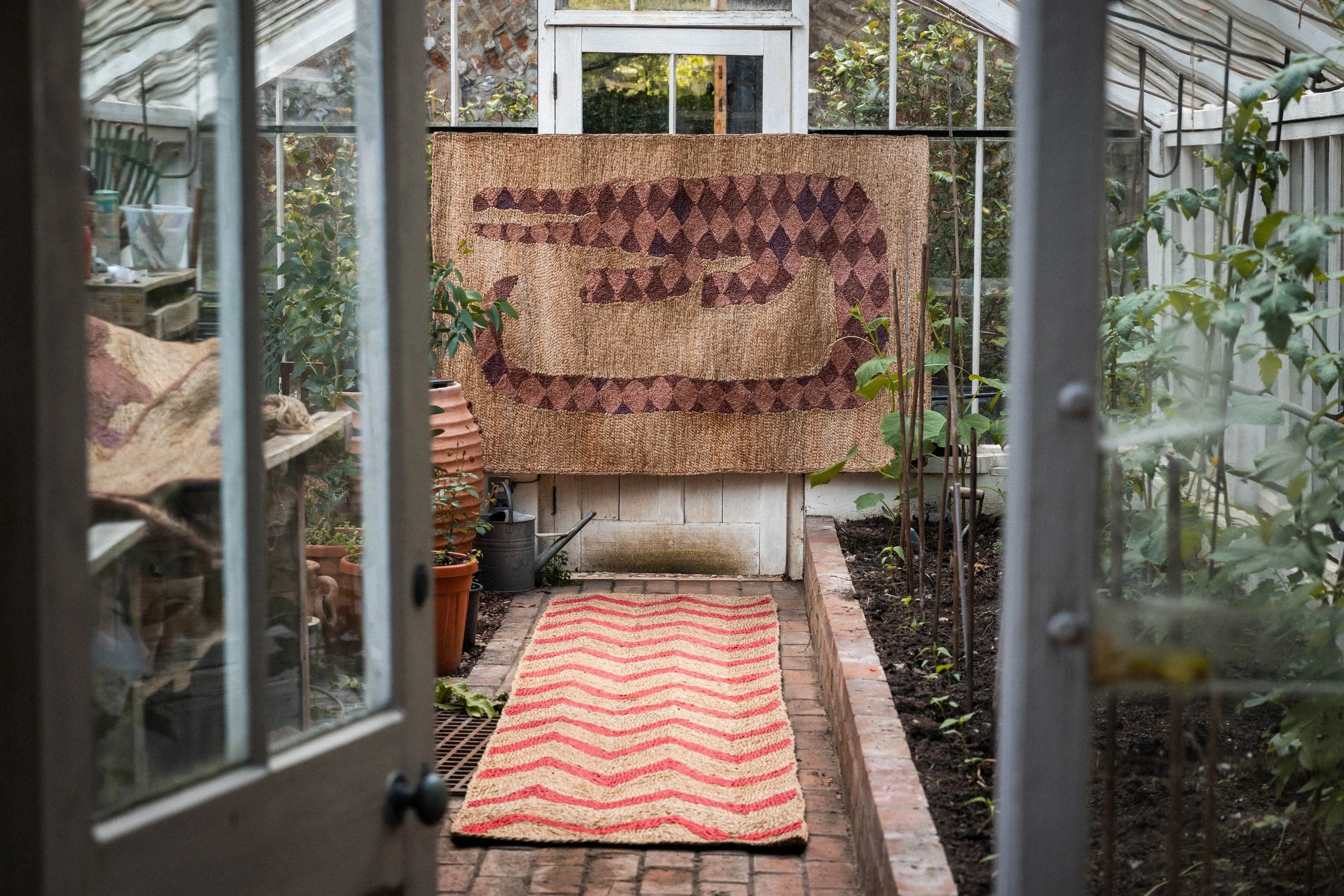
We work closely with artisanal weaving communities in Northeast India near Varanasi, in Kathmandu, Nepal, and in Usak, Turkey. Through our Fairtrade label, LabelSTEP, we invested significant time in research before forming these partnerships, ensuring we fully understood the social and environmental contexts in which our partners operate.
We only collaborate with studios that actively support women and families. Fair pay, safe and positive working conditions, and environmental responsibility are completely non-negotiable for us.
While Bella was living in India, she gained first-hand insight into the realities of the craft industry, spending time with artisans on the looms. It quickly became clear how under-recognised their skill and expertise often are. Traditional crafts are at risk of disappearing, quality is frequently compromised, and there is an urgent need to support and empower women within these communities. Addressing these challenges has been central to Pelican House from the beginning.
We see these relationships as true collaborations rather than supplier arrangements. Our goal is to preserve ancestral knowledge and rich cultural heritage while sharing the stories behind the pieces we create. As we grow, we hope to build partnerships with even more craft communities that need support.
7. What values are non-negotiable for you when growing the brand?
In almost every way, we’re naturally aligned in how we see the world, and that shared outlook shapes everything we do.
Reciprocal — We believe in a business model where every stakeholder benefits. That means working with partners like LabelSTEP to ensure ethical growth is shared fairly and maintaining close relationships with artisans to honour our commitments at every stage.
Artisanal — We see ourselves as creative mediators between buyers and artisans. Our model is driven by craftsmanship, and we’re committed to preserving and elevating those skills through design and storytelling.
Original — Pelican House blends heritage and modernity to create a bold yet timeless aesthetic. We believe design can be a lasting force for positive change, especially when artisans are elevated and celebrated.
Personal — We believe in creating intimate and meaningful experiences for everyone involved. For artisans, that means celebrating cultural individuality at the source. For clients, it means co-curating bespoke pieces while forging genuine connections with the makers behind them.
8. What do you hope people feel when they live with a Pelican rug in their home?
More than anything, we hope people feel connected to something made with real hands, real intention, and a genuine story. Every rug carries the skill of artisans whose craft has been passed down through generations, and we hope that sense of care is quietly felt underfoot.
Beyond that, we simply hope our rugs bring joy into a home.
9. What’s been the most meaningful moment so far in building Pelican House?
There have been many, but the moments that stay with us most are always spent visiting our artisan communities in India, Nepal, and Turkey, witnessing the extraordinary skill and pride behind each piece.
One moment captures it perfectly: watching a weaver create a rug using techniques their family has practised for centuries, and realising that by bringing that piece into a home in the UK or US, we’re not simply decorating a space — we’re helping sustain a living tradition.
10. If you could design a rug specifically for Restaries, what would it be like?
Restaries feels like a place where the wild and the refined exist in beautiful tension — ancient woodland and old farm buildings combined with a thoughtful design eye that makes every detail feel intentional. We’d create something that honours exactly that duality.
Instagram Handle - @pelican_house
Website - www.pelican-house.com